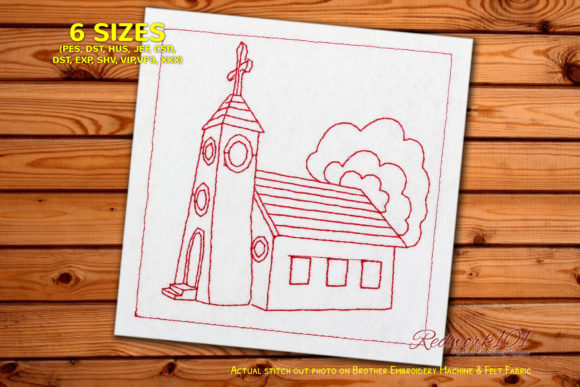
Chuch Building with Trees Redwork Design
First Impressions: A Timeless and Elegant Embroidery Design
The Chuch Building with Trees Redwork Design exudes a sense of elegance and timelessness, making it an ideal choice for craft fair sellers and embroidery business owners. The design's simplicity and charm make it stand out, blending well with both traditional and modern aesthetics. It feels both decorative and premium, perfect for adding a touch of sophistication to your handmade products.
Product Performance: Versatility Across Various Handmade Items
When considering the Chuch Building with Trees Redwork Design for different products, its versatility shines through. Here’s how it performs on various items:
- Tote Bags: This design adds a beautiful, subtle touch to tote bags, making them perfect for gift-giving or everyday use. The redwork style complements a wide range of fabric colors and textures.
- Aprons: Embroidered aprons with this design are a hit at craft fairs. The design’s clean lines and elegant appearance make it a standout, especially on light-colored fabrics.
- Kitchen Towels: The Chuch Building with Trees Redwork Design is a natural fit for tea towels. Its minimalistic yet detailed nature enhances the overall look of the towel, making it a popular choice for kitchen decor.
- Caps and Patches: While the design works well on caps, it’s essential to test it on curved surfaces to ensure the details remain clear. As embroidered patches, it adds a charming, rustic feel to any garment or accessory.
- Fabric Pouches and Pillow Covers: These items benefit greatly from the design’s decorative and premium feel. The design’s simplicity and elegance make it a versatile addition to any home decor item.
Practical Selling and Production Points
From a practical standpoint, the Chuch Building with Trees Redwork Design is easy to understand at a glance, making it appealing to customers. It can be used as both a small accent and a large focal design, depending on the product. For online listings, the design photographs well, capturing the intricate details and the overall aesthetic. Additionally, it is repeatable for batch production, which is crucial for meeting demand during busy craft fair seasons.
Important Considerations for Production
- Dense Stitch Areas: Test the design on scrap fabric to ensure that dense stitch areas do not cause puckering or other issues. Adjust the stitch density if necessary.
- Tiny Details and Small Lettering: Ensure that the design maintains clarity even at smaller sizes, especially when used on embroidered patches or in tight spaces.
- Fabric Texture and Thickness: The design may require adjustments when used on textured towels or thick fabrics. Use the right stabilizer to maintain the design’s integrity.
- Thread Colors and Contrast: Choose thread colors that provide good contrast against the fabric. This will enhance the visibility and appeal of the design.
Visual Appeal and Customer Engagement
The Chuch Building with Trees Redwork Design significantly enhances the visual appeal of your handmade products. Its elegant and timeless nature draws customer attention, adding value to each item. Whether displayed on a tote bag, apron, or pillow cover, the design stands out, making your booth display more attractive and engaging. This, in turn, helps to build brand consistency and customer loyalty.
Embroidery Designer Notes
To ensure the best results with the Chuch Building with Trees Redwork Design, follow these practical tips:
- Test on Scrap Fabric: Always test the design on scrap fabric to check for any issues before embroidering on your final product.
- Check Thread Contrast: Use thread colors that provide good contrast against the fabric to make the design stand out.
- Review Spacing and Hoop Size: Confirm the spacing and hoop size to ensure the design fits well and looks balanced on the product.
- Inspect Stitch Density: Adjust the stitch density if needed to prevent puckering and ensure a smooth finish.
- Use the Right Stabilizer: Select the appropriate stabilizer based on the fabric type and thickness to maintain the design’s quality.
- Create Real Mockups: Make at least one real mockup to see how the design looks on the actual product. This step is crucial for assessing the overall effect and making any necessary adjustments.
- Compare Fabric Colors: Experiment with different fabric colors to find the best match for the design, enhancing its visual impact.
- Confirm Commercial Licensing: Before selling finished products, always check and confirm the commercial licensing terms for the embroidery file.
By following these guidelines, you can create high-quality, visually appealing products that resonate with your customers and help drive sales at your craft fair booth.